

Deck railings play a vital role in our daily lives. They not only enhance the overall aesthetics of outdoor spaces, but also impact the safety of your family. A robust and durable railing system provides reliable protection. It allows you to enjoy your outdoor space with peace of mind. Railing producers use many materials. Homeowners most popularly choose aluminum vs vinyl deck railing for residential patios. They choose these materials because they offer excellent performance and relatively low maintenance costs.
So, what are the differences between aluminum vs vinyl deck railing? Which material truly meets your needs in terms of performance, durability, and ease of maintenance? Today, we’ll provide an in-depth comparison of aluminum and vinyl patio railings. We hope that it can help you make an informed choice.
Before making comparisons, let’s understand the basic characteristics that high-quality outdoor terrace railings should possess:
The primary purpose of long-lasting deck railings is to ensure safety. They must be able to withstand wind, the leaning weight, and even the pressure of extreme weather conditions. A compliant railing system should meet relevant building codes, typically requiring a horizontal load of 30-50 pounds (approximately 13.6-22.7 kg) per foot (approximately 13.6-22.7 kg).
Ultraviolet rays from sunlight can cause materials to fade and become brittle. Rain and moisture can cause corrosion or mold growth. Drastic temperature changes can cause materials to expand or contract. High-quality railing materials need to withstand these environmental factors over a long period. They must also maintain their original appearance and strength.
Ideally, long-lasting deck railing materials should be easy to clean and require minimal painting or waxing. For deck railing durability, they should maintain good condition for approximately 20-30 years or even longer.
Aluminum railings have carved out a significant niche in the outdoor railing market. Thanks to their excellent craftsmanship and performance.
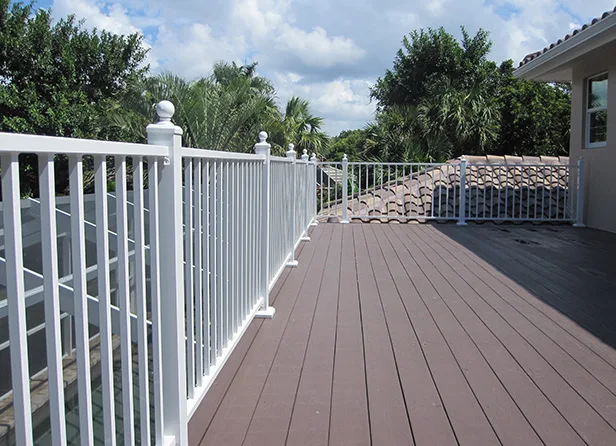
Aluminum is a lightweight yet strong metal. Aluminum has excellent corrosion resistance, and anodizing or powder coating further enhances this property. Manufacturers usually extrude aluminum railings, which gives them high structural strength and the ability to support substantial loads. This makes them perfect for applications that demand high-strength support.

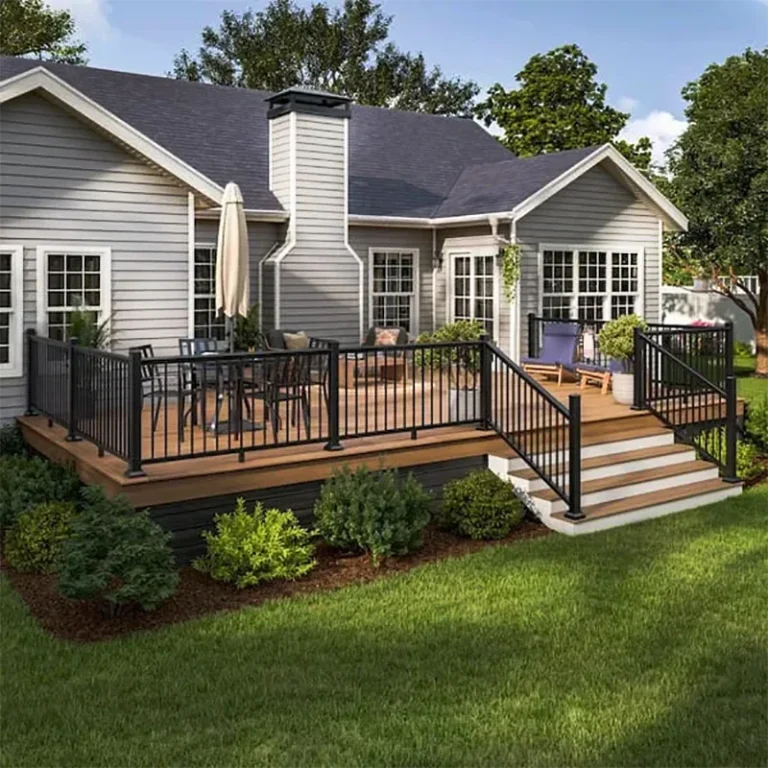
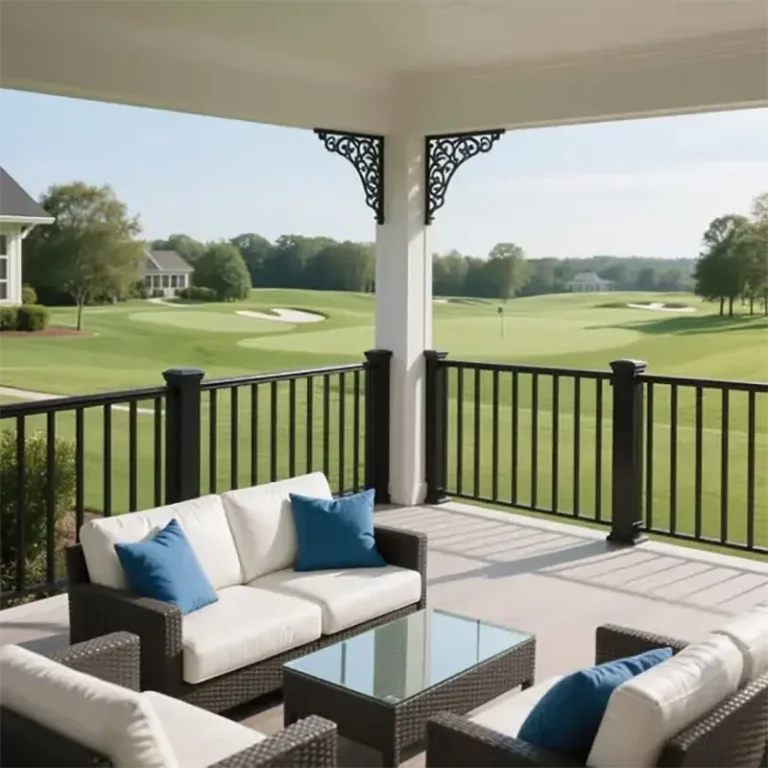
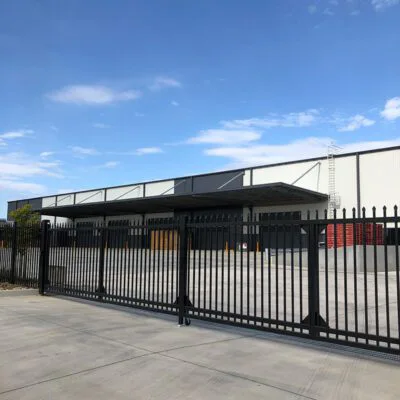
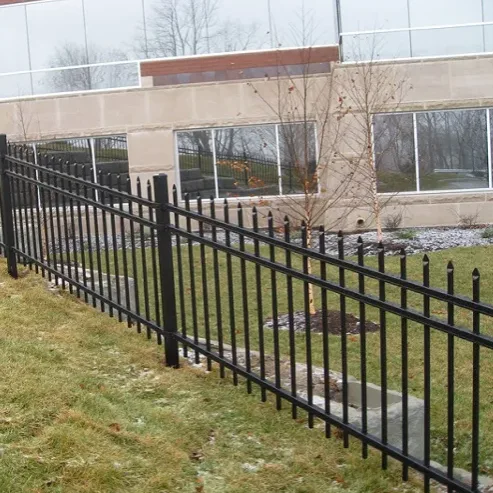
Aluminum railings can be found on various residential decks, balconies, staircases, and the exterior walls and courtyards of commercial buildings. They can be made in a variety of styles, from modern minimalist designs to traditional classic looks. Aluminum railings offer outstanding versatility and adaptability. They are not only aesthetically pleasing but also offer advantages such as corrosion resistance and lightweight construction. Therefore, aluminum railings can achieve rich design expressions in different settings.
Aluminum railings won’t rust, rot, or be invaded by insects like wood. They have excellent UV resistance and are not likely to fade. For elevated residential decks, aluminum deck railing systems provide long-term stability and are low-maintenance. All you need to do is occasionally wipe them with water and a mild detergent to keep them shiny.
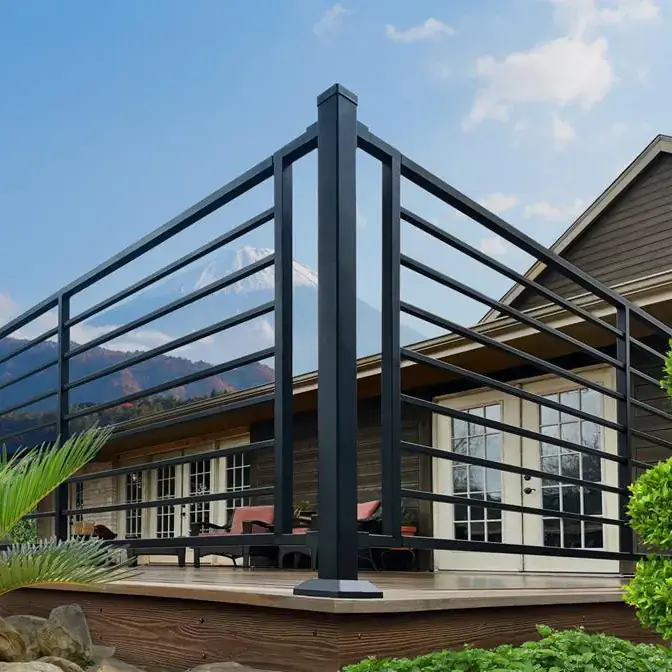
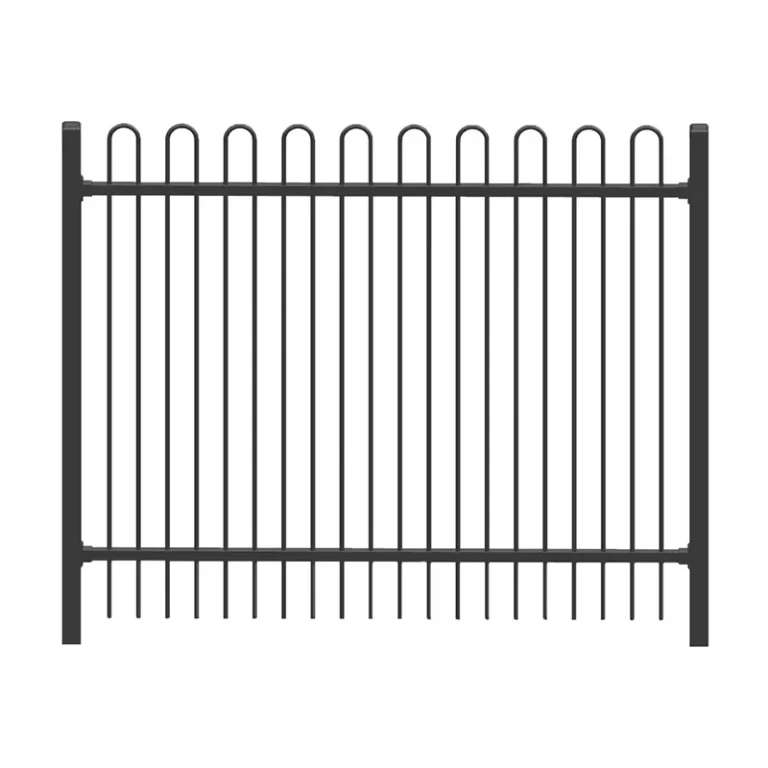
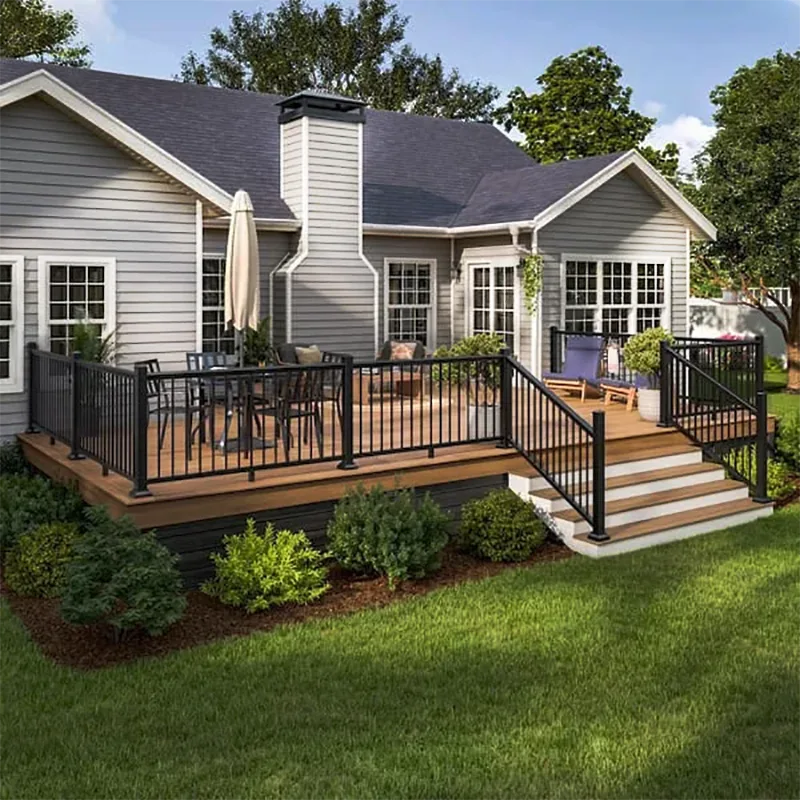
Such as our Black Custom Aluminum Railing And Stair Handrail Railing. The manufacturer designs the railing with 5/8″ square pickets for easy DIY installation and offers great value. A durable, AAMA2604-compliant powder coat finish ensures long-lasting beauty and protection. The pre-welded panels with integrated posts and brackets simplify the installation process. Track covers hide the hardware for a clean, professional look. These railings are ideal for stairs with a 30-40 degree incline, and you can easily adjust them to fit your specific needs.
Vinyl deck railings present a compelling option for homeowners seeking an affordable and aesthetically pleasing outdoor railing solution.

Vinyl is a plastic material, typically made of polyvinyl chloride (PVC). Vinyl railings come in a variety of modern design looks. It can imitate the appearance of other materials, such as wood and metal. They are commonly used in residential decks, patios, and other outdoor areas.
Vinyl railings are relatively inexpensive and easy to install. They have some level of weather resistance, are not prone to fading, have a smooth surface, and are relatively easy to clean. However, they have relatively low strength, may deform in high-temperature environments, and can be easily damaged by significant impacts.
Vinyl railings are relatively easy to maintain, usually only needing a wash with soap and water. However, their lifespan is relatively shorter, typically around 10-15 years, when compared to aluminum railings.
Aluminum fences excel in resisting harsh weather and intense sunlight. Studies show that after 10 years of continuous sun exposure, the color change of aluminum fences is typically less than 5%. Overall performance remains largely unaffected, with no significant decrease in strength or functionality.
On the other hand, while vinyl fences also offer some UV protection, sunlight will damage them over time. Generally, after about five years of exposure to high temperatures, vinyl fences will begin to show noticeable fading. The material will become brittle, increasing the risk of cracking and breakage.

Aluminum fences exhibit excellent structural strength. Tests show that when a standard-sized aluminum railing bears a weight of 200 pounds, its bend is less than half an inch. The railing can reliably support the weight and maintain its shape, providing a high level of security.
However, vinyl railings have lower strength. At the same weight of 200 pounds, vinyl railings can bend by 2 inches or more. This noticeable bending not only affects aesthetics but also raises concerns about the long-term integrity and safety of the railing.
In the long run, aluminum railings are a more economical option. With simple maintenance, such as occasional soap and water washing, aluminum railings can last for over 30 years.
Vinyl railings are indeed easy to maintain. A quick wipe is usually all it takes to keep them looking neat. However, their lifespan is much shorter. Most vinyl railings have a lifespan of about 15 to 20 years before noticeable signs of wear, such as cracking, fading, and compromised structural integrity, begin to appear.
If you are a DIY enthusiast, vinyl railings are a good choice. If you are looking for an easy and convenient installation method, vinyl railings are also a good choice. They can usually be installed quickly without any special tools.
Now that you know the pros and cons of aluminum vs vinyl deck railing, let’s see which one works best for different situations:

Looking for a strong, reliable, and easy-to-care-for fence? As a professional Aluminum Fence manufacturer, our aluminum deck railing system is perfect!
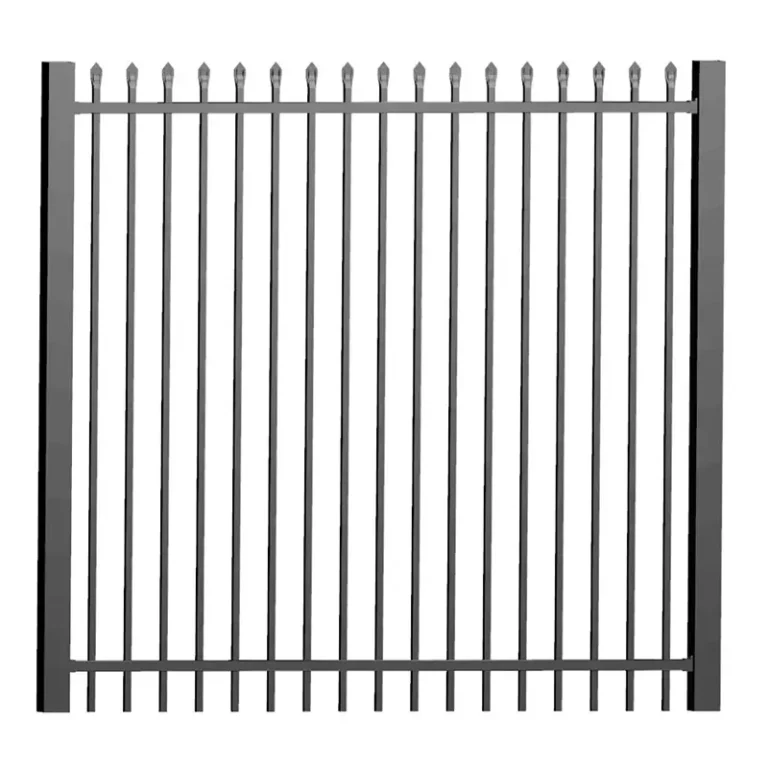
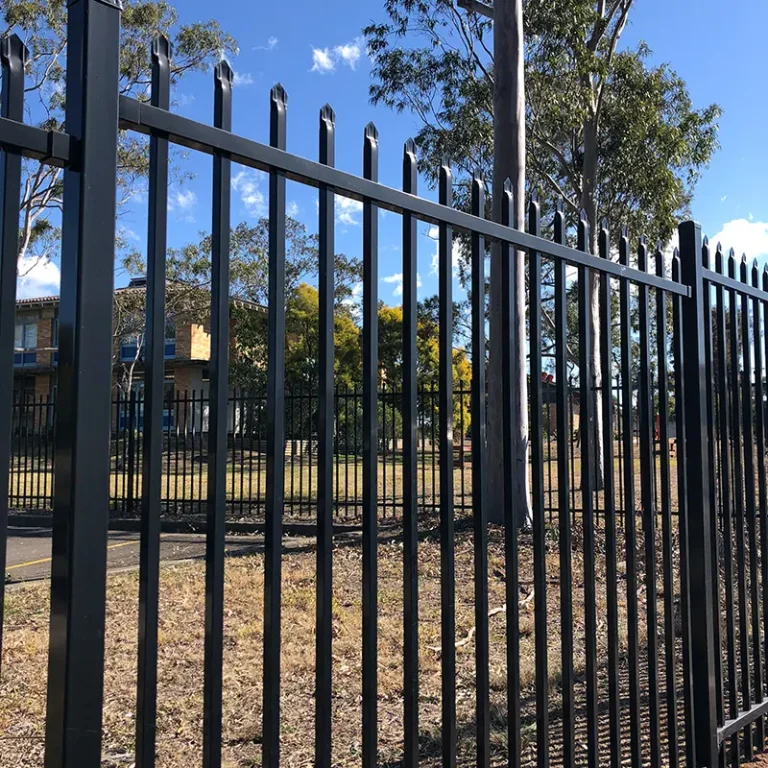
FENCE DEPOT’s aluminum railings are better than traditional wrought iron. They’re built to handle all kinds of weather. These railings combine top performance with a simple, classic style that looks great on any patio or staircase. They add a touch of style to your outdoor space.
In short, aluminum vs vinyl deck railings each have their advantages, but both aim to provide safe, beautiful, and easy-to-maintain outdoor spaces.
If the environment is harsh and long-term stability is a priority, aluminum railings should be considered first; if reducing maintenance frequency and initial costs is the priority, vinyl railings are a viable option.
For assistance in selecting the right railing material for your deck, please contact us to discuss aluminum deck railing solutions suitable for your project.